 Origins TCG
Three posts, one system
Between 29 September and 9 October 2026 the official Origins TCG account on X published three long posts on how sets and collecting will work. Koin Games says it takes its model first and foremost from physical card games: sealed product, limited print runs, defined release periods and local game stores.
Our guide to the collector economy already covers the Alpha Edition formats and its seven rarity tiers, from the official pre-registration page. What these posts add: the size of the first set, the Alpha tag, the rhythm of later sets, sealed products as Steam items, the layers of rarity, how grading should work and the tournament cards.
Two card systems
Origins has two kinds of card that share characters and designs, but not access, ownership or supply:
- Gameplay cards. Every base gameplay card will be free to every player, every season. They cannot be traded and exist to play with. In Koin's words, "a player will never need to buy a pack or own a collectible version to build a competitive deck": the studio calls it free-to-compete.
- Collectible cards. Separate Steam inventory items that you own and can trade. Even the standard collectible version looks different from the gameplay card, with a different frame and card view that puts the illustration forward.
The scarcity Koin describes applies only to the collectible side: editions, art treatments, grades, sealed products and tournament provenance. It "will never limit access to the competitive card pool", and an edition closing never removes a card from the game. What money does and does not buy is in our free-to-compete guide.
Myths and Legends and the Alpha Edition
The first set is Myths and Legends, with 218 characters. Its first collectible release is the Alpha Edition, which will only be available through the Kickstarter, on 27 October according to the CEO (our Kickstarter guide has the details). Every Alpha card carries an Alpha tag on its face, so the edition stays recognisable. A character can return in a later set, but not in its Alpha version: once the window closes, Koin says it will issue no more Alpha cards, packs, booster boxes or cases.
The collector system is scheduled to launch after Steam Next Fest (19–26 October), and the 9 October post says all of it will be tradeable via Steam from "day 1".
A new set every 3 to 4 months
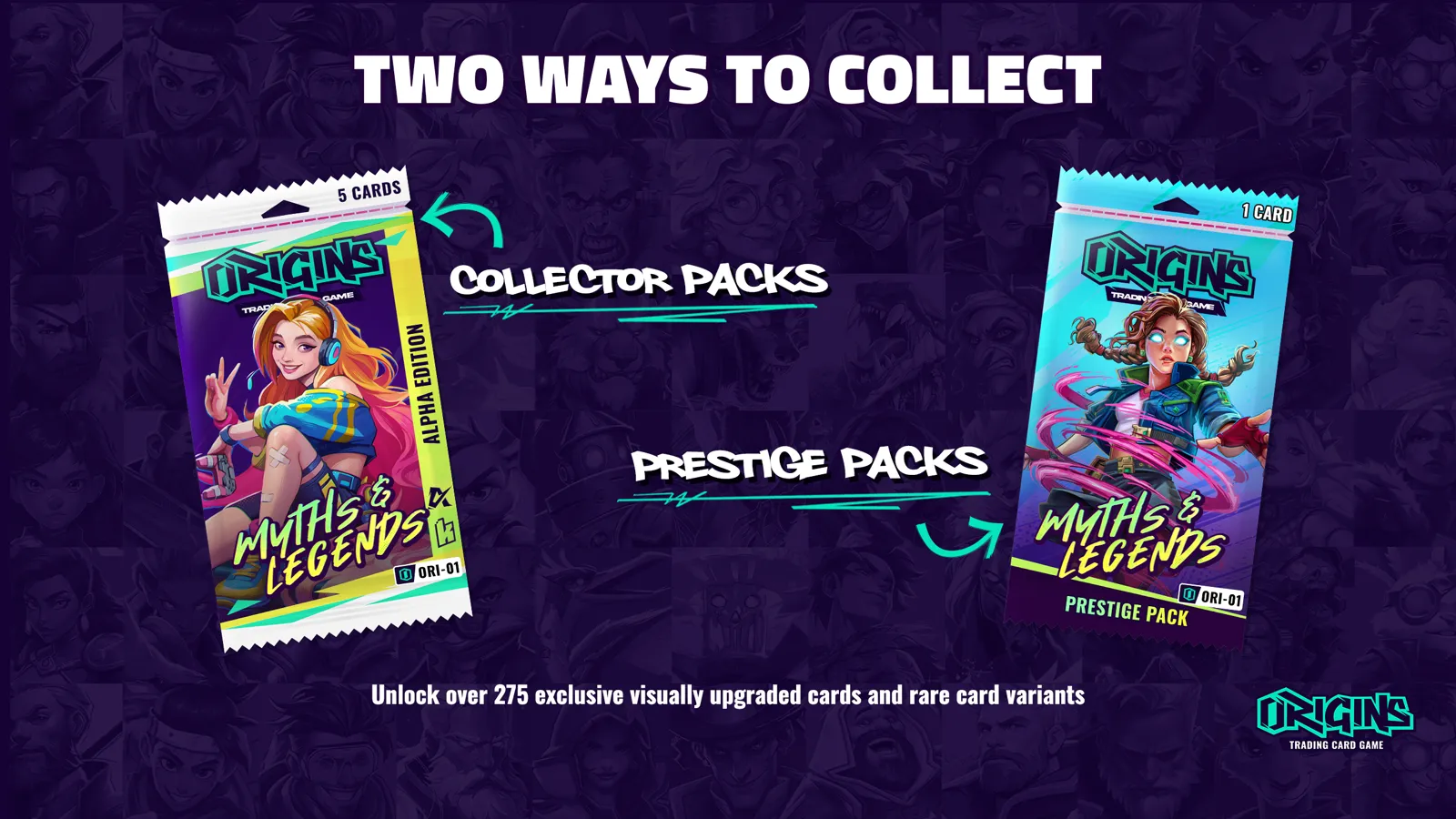
Koin plans a new set every 3 to 4 months. Each standard set has a 3-month sale window, during which collectible cards and sealed products are sold through Origins, participating local game stores (the Digital LGS Program presented on 6 October) and approved online partners. After that, the only copies left are the ones collectors already own, tradeable on the Steam Community Market.
Sealed products stay sealed
Packs, booster boxes and cases will be individual Steam inventory items: you can open them, trade them or keep them sealed. Booster boxes and cases are preorder-only, so no new sealed units are added once that window closes. In Koin's words, sealed product stays part of the collection "instead of becoming a temporary purchase screen that disappears after opening".
Rarity, treatments and grading
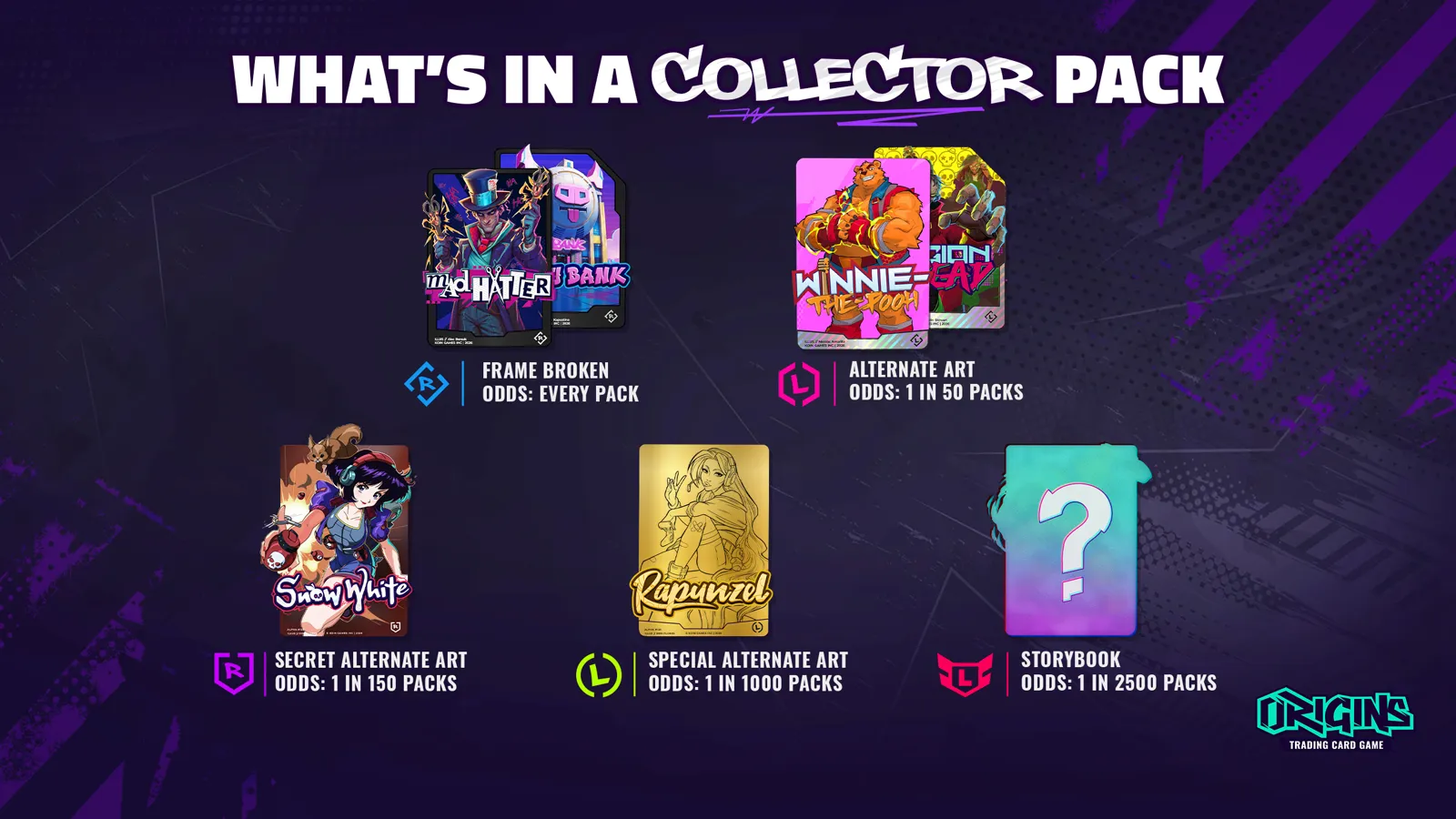
A collectible card can differ on five layers: edition, rarity, grade, digital condition and promo status. None of them changes what the card does in a match. Collector packs can contain standard collectible cards, alternate-art variants, animated Storybook cards and digital error cards.
On grading, the two posts don't sound the same. On 29 September Koin describes it as decided: a pack's contents are set before it is opened, and when a collectible card is revealed "the system rolls its grade". Grading is "automatic, instant, and free", on centering, corners, edges and surface, with visible digital defects explaining the result. On 2 October the tone is more cautious: "We're exploring a digital grading system" in which several parameters make up the grade and defects vary from card to card. Both posts give the same scale, from 1 to 10 with half grades; the rest may still change, and in the playtest update of 1 October the team asked players to ignore the "How Grading Works" screen for now. Grade is separate from rarity and art, and according to Koin low grades can be collectible too, because they make a copy more specific.
Tournament cards: the 1/1 Dracula
Some collectible cards will never be in packs or stores: ultra rare tournament promos, earned only by competing. The first example is the Crimson Cup, whose winner gets a 1/1 Dracula promo card and will be, in Koin's words, the only person owning it, forever. The other prizes are in our Crimson Cup prize table.
First editions and scarcity, according to Koin
The 9 October post argues that in physical card games the first print run becomes scarce because it is opened and played before the audience arrives. As examples it cites a 1999 Pokémon Base Set 1st Edition booster box, which retailed for around 100 to 120 dollars and whose sealed copies have reportedly sold for roughly 10,000 to over 250,000 dollars, and a 1993 Magic Alpha booster box, around 88 dollars at retail, whose sealed packs reportedly trade for 8,000 to 12,000 dollars. These are Koin's figures, not ours.
Koin itself adds that those outcomes took decades, depended on both games becoming enormous and "are not a formula", and the 29 September post states that limited supply "does not guarantee demand, market value, or price appreciation". We report what the studio says: nothing here is a reason to buy. Collecting is optional, and you can play Origins competitively without spending anything.
What we don't know yet
- Prices and print-run sizes for the Alpha Edition and later sets.
- Whether grading will work exactly as described on 29 September, and how "digital condition" differs from grade.
- Which day "day 1" of Steam trading is, and how today's demo collectibles fit into the new system.
- The name and date of the second set, and the odds of alternate arts, animated Storybooks and error cards.
- How the 3-month window works between Origins, stores and online partners.
Where this comes from
Three posts by the official Origins TCG account on X: 29 September (sets, Alpha Edition, grading), 2 October (the two card systems and the collector system) and 9 October 2026 (first editions and supply). As of 11 October there is no Steam post on these topics.
Source
Cards in this update

Frequently asked questions
- Do I need to buy packs to compete in Origins TCG?
- No. According to Koin Games, every base gameplay card will be free to every player, every season, and a player will never need to buy a pack or own a collectible version to build a competitive deck. Collectible cards are separate, tradeable Steam items and packs are optional.
- What is the Origins TCG Alpha Edition?
- The first collectible release of Myths and Legends, the first Origins set, with 218 characters. It will only be available through the Kickstarter, every Alpha card carries an Alpha tag on its face, and once the window closes Koin says it will issue no more Alpha cards, packs, booster boxes or cases.
- How will card grading work in Origins TCG?
- Every collectible card is graded automatically when it is opened, on a scale from 1 to 10 with half grades. On 29 September Koin described grading as automatic, instant and free, based on centering, corners, edges and surface; on 2 October it said it is still exploring the system, so the details may change.
- How often will Origins TCG release new sets?
- Koin Games plans a new set every 3 to 4 months. Standard sets have a 3-month sale window through Origins, participating game stores and approved online partners; after that, copies only come from collectors through the Steam Community Market.
Written by Pierluigi “Aldry” Cella · The whole editorial team
OriginsMeta is an independent project and is not affiliated with Koin Games.