
 Origins TCG





Written before patch 0.7. This deck and this guide were published before patch 0.7 of 29 September 2026: the list and the game plan are not canonical for 0.7. The card tables show today's costs and stats.
The deck in one paragraph
King of Value Trade is a midrange list led by King Arthur, published on OriginsMeta on 22 September 2026 by Davdas, a member of the site's staff, and tagged for ladder play. The name says the plan: "almost every piece wants to go two for one", that is, to answer two of the opponent's cards with one of yours. Do that often enough and the board becomes yours on its own, without needing a single big finishing turn.
The list
Twenty-five cards: the Legendary plus twelve cards played as two copies each.
| Card | Cost | What it does |
|---|---|---|
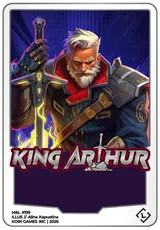
| King Arthur (Legendary) | 7 | 7/7 with Shield; On Reveal it gives Shield to your Good characters |
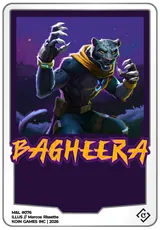
| Bagheera | 2 | 1/1; On Reveal on a middle space it gets +2⚔️/+2❤️ |
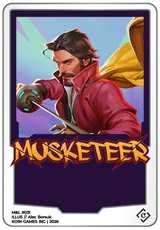
| Musketeer | 2 | 2/1 with First Strike |
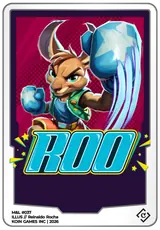
| Roo | 2 | 2/4 with Move |
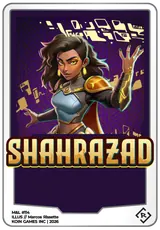
| Shahrazad | 2 | 1/4; heals 1 damage from your barrier here whenever a card enters your hand |
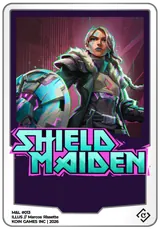
| Shield Maiden | 3 | 3/1 with Shield |
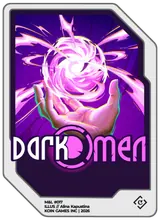
| Dark Omen | 3 | Spell: destroy ANY character |
| Cowardly Lion | 3 | 2/5 with Defender |
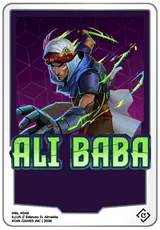
| Ali Baba | 3 | 2/3; draws a card whenever it damages an opponent's barrier |
| Spellbook | 4 | Spell: from now on, a random spell in hand each round, discarded before combat |
| Lancelot | 4 | 4/4; every Good character you play in its location gets +2⚔️/+2❤️ |
| Fairy Godmother | 5 | 3/3; On Reveal gives another ally +3⚔️/+3❤️ |
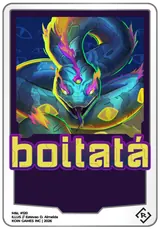
| Boitata | 5 | 5/5; spell and ability damage aimed at your barriers hits the opponent's barrier there instead |
Ten units and two spells, and ten of the thirteen cards are Good characters: that is not a coincidence, it is what makes the Legendary worth seven mana.
How the deck wins
Three keywords do the work.
- Shield absorbs the first damage. King Arthur gives it to all your Good characters at once, and Shield Maiden brings her own: a 3/1 with Shield trades with a 3/3 and stays on the board.
- First Strike on Musketeer means the enemy takes the damage before it can answer: two mana that remove a bigger body.
- The buffs of Lancelot and Fairy Godmother turn an even fight into a one-sided one. Lancelot buffs every Good character played in his location, so he rewards you for keeping the lane going instead of spreading thin.
Ali Baba is the engine: every time it damages a barrier you draw. Shahrazad is the other half of the same idea — she heals one damage from your barrier in her location each time a card enters your hand, so drawing keeps you alive as well as ahead.
Mulligan
Bagheera is a must-have, and Roo is now worth keeping in every hand: the Demo patch of 21 September made it a 2/4, so it survives the early exchanges. Musketeer and Shield Maiden put you ahead in rounds two and three. Against an aggressive deck keep Cowardly Lion, whose Defender holds the lane; against a control deck keep Ali Baba, which turns a free barrier hit into cards. If you expect a long game, keeping Spellbook is a fair call.
Round by round
- Rounds 1–3: trade up. Bagheera in the middle, Musketeer across from a 1- or 2-Health body, Roo where you may want to move later. Every fight you can win without losing the body is a card gained.
- Rounds 4–5: hold a lane. Lancelot, then play the Good characters in his location: each arrives +2⚔️/+2❤️ bigger than it should be. Boitata on five is a 5/5 that also turns enemy spell damage aimed at your barriers back at theirs.
- Rounds 6–7: the Legendary. King Arthur is a 7/7 with Shield, and his On Reveal gives Shield to everything Good you already have on the board. Do not play him into an empty board: the value is in the Shields, not in the body.
- Dark Omen, whenever it matters. Three mana to destroy ANY character is the answer to the one card you cannot beat in a fight: a buffed body, a Defender in the wrong lane, an enemy Legendary.
Two notes from the author
- Fairy Godmother is not only a finisher. The deck page points out that she can also protect Ali Baba, Shahrazad or Cowardly Lion: +3❤️ on the right body means the engine survives another round.
- Dark Omen has to be precise. With two copies and no other removal, spending one on the wrong target leaves the real threat alive.
Matchups
Ranked data is not public, so this is OriginsMeta's reading of the lists, not a win rate.
- Against aggressive decks. Cowardly Lion and Shahrazad together are the safety net: the Defender takes the hits, the healing gives back the barrier damage that gets through. Do not trade Shield Maiden early for a 1-Health body if a bigger one is coming.
- Against control decks. Ali Baba, then a second one. The deck page is clear about it: the list wants to keep drawing while the opponent digs for answers. Keep Dark Omen for the card that closes their game, not for the first thing they play.
- Against decks that damage your barriers with spells (Healing Healsing and other lists with Boitata). Whoever lands Boitata first turns that damage around: with two copies in the list, it is worth holding one rather than losing both to the same fight.
The weaknesses, in the author's words
The deck page lists three: no area removal, Dark Omen must be used precisely, and you need to read the opponent's plan. The first two follow from the list: apart from Dark Omen there is nothing that removes a character outright, so a board you let grow stays grown. The third is the honest part — this deck makes its value one exchange at a time, and each exchange is a decision.
Where to go next
- The deck page has the full list with the charts, the author's notes, “Open in the deck builder” and the game code (KGBLDC…).
- Card stats are those of patch 0.7 of 29 September 2026, which raised Bagheera to two mana and Spellbook to four (the spells Spellbook adds can no longer be Spellbook); the 0.8 patch notes of 27 October 2026 (Early Access) mention no card changes.
Frequently asked questions
- What is a value trade in Origins TCG?
- Making one of your cards answer two of the opponent's, or trading a cheap card for an expensive one. This deck is built around that idea: Shield, First Strike and buffs make your characters survive the fight they win.
- What do you keep in the mulligan?
- Bagheera and Roo, which are solid on curve, Musketeer and Shield Maiden for the early rounds. Against aggressive decks keep Cowardly Lion; against control, Ali Baba.
- Why is Roo good after the 21 September patch?
- The Demo patch of 21 September 2026 took Roo from 2/3 to 2/4 (+1 Health) for two mana while keeping the Move keyword, so it survives most of the early exchanges instead of trading down.
- Is Spellbook necessary?
- No. It adds a random spell each round for fuel and unpredictability, but the deck page says the list can win without it.
Written by Pierluigi “Aldry” Cella · The whole editorial team
OriginsMeta is an independent project and is not affiliated with Koin Games.